

KARANDA — When Keretia Chikowe was diagnosed with Stage 3 cancer in 2017, the lives of the people around her did not stop.
Her family continued with theirs. Her friends and colleagues returned to their routines.
Chikowe was left confronting a disease that had suddenly changed hers.
“When you’re diagnosed, life goes on for those people that are well,” Chikowe says. “Your family, they move on. Your friends, they move on. Your colleagues at work, they move on, and you are in a space where it’s you and God facing each other in the disease.”
Two years later, Chikowe founded Second Chance Trust to provide something she says was missing when she went through cancer herself: psychosocial support and counselling.
Her story reflects a side of cancer care that begins long before chemotherapy and can continue long after treatment — finding the money for care, navigating specialised services, confronting stigma and having someone who understands what it means to hear the words: you have cancer.
At a recent cancer outreach programme at Karanda Mission Hospital, survivors such as Chikowe were not simply there to tell their stories. They had become part of the support system for patients now facing journeys similar to their own.
“When I was sick, I noticed that there was a gap in terms of psychosocial support and counseling for people that were going through cancer,” Chikowe says.
For her, the gap became apparent from the moment she received her diagnosis.
She had gone to see her doctor alone.
“My doctor was like, ‘Why did you come alone?’ And I said, ‘No, there were three of us: myself, yourself and God,’” she recalls.
The doctor drew his chair closer.
“He said, ‘You have cancer, Stage 3.’ And then I asked him, ‘What is the treatment?’”
Chikowe says her response surprised him.
“I didn’t fall apart,” she says.
She thought about her two young daughters.
“For me, after my diagnosis, I told myself that I wanted to live. I wanted to survive for my two young girls,” she says.
Faith became central to the way she navigated treatment, but Chikowe also came to understand that medical care alone did not address the fear and isolation cancer could bring.
In November 2019, while she says she had not completely healed herself, she founded Second Chance Trust.
“I had not healed completely, but I took it upon myself to cover the gap of psychosocial support,” she says.
The organisation now provides counselling and psychosocial support to people newly diagnosed with cancer, those undergoing chemotherapy and others worried that they may have the disease.
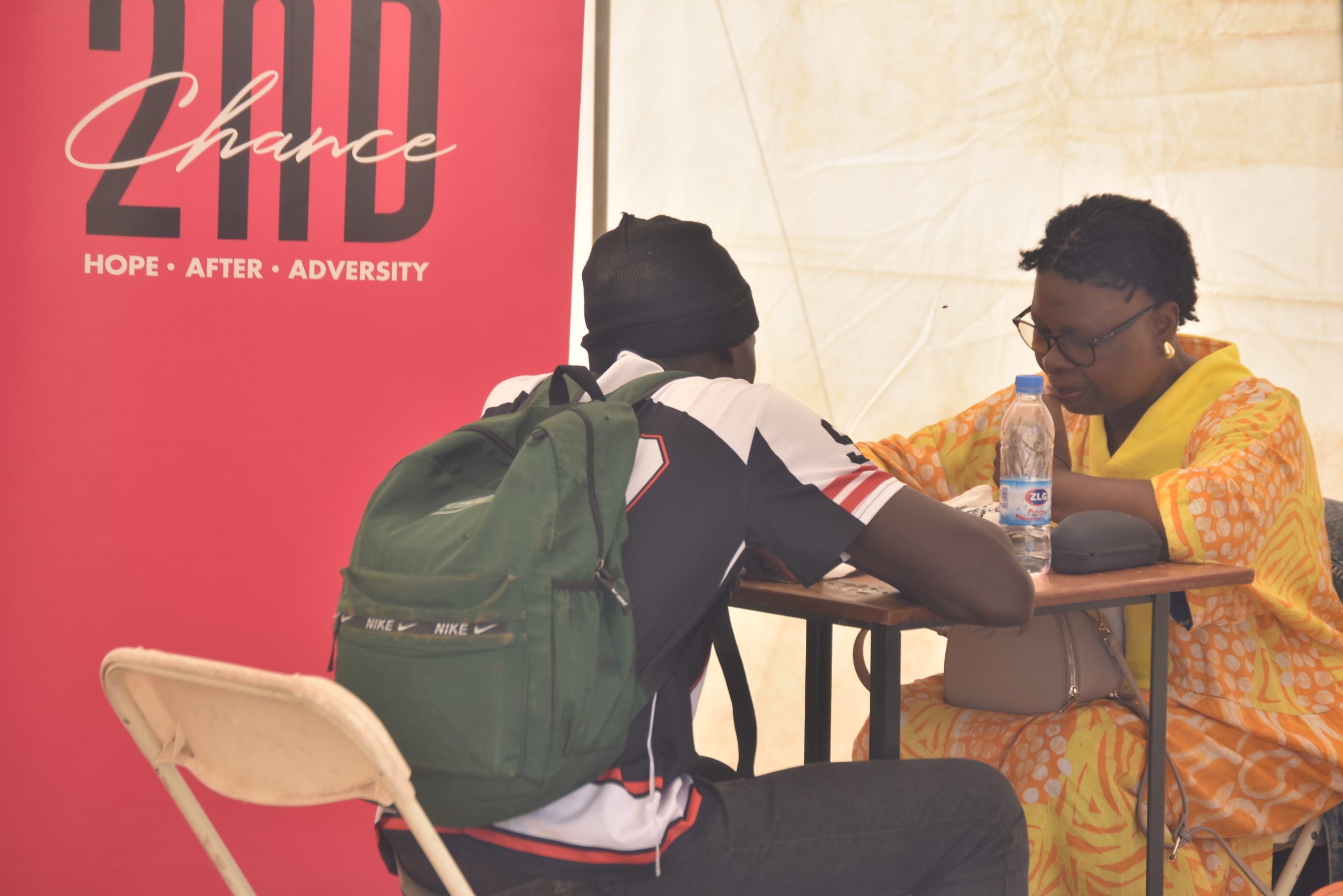
At Karanda, Second Chance Trust worked alongside doctors and Cancerserve Trust during the outreach, providing emotional and spiritual support while medical teams concentrated on screening, diagnosis and treatment.
“When we get to Karanda, the doctors are busy wanting to do the clinic, but Second Chance offers the psychosocial support and counseling to cater for the spiritual and emotional needs of our patients,” Chikowe says.
For Gladys Fainozi, 58, the cancer journey presented a different challenge.
She did not cry when she was told she had cancer.
She cried when she learned where she might have to go for treatment.
Fainozi says she first discovered a breast lump in 2003 but initially ignored it because she was studying.
“I felt the lump in 2003, and I decided to ignore that because I didn’t want it to disturb my studies,” she says.
After completing her studies, she began feeling unwell and eventually mentioned the lump to a doctor.
A biopsy was recommended.
By 2006, she said, the lump had grown.
Later, while travelling to Kariba, she stopped to see the doctor again.
“He felt the lump and he said, ‘Wow, we have delayed. This is not good,’” Fainozi recalls.
The doctor located her results and told her she had cancer.
“He looked at me and he said, ‘Aren’t you going to cry?’ I said, ‘I’m not going to cry,’” she says.
Her husband was similarly composed, asking what they needed to do next.
“We knew that there was this disease called cancer, but I, to be the victim, I wasn’t expecting that,” Fainozi says.
She was referred to a surgeon in Harare and later advised to seek treatment at a private hospital.
That was when the financial burden of cancer became real.
“That’s when I cried because I told him that we cannot afford the bills from that hospital,” she says.
Her family stepped in to pay for treatment and deliberately shielded her from discussions about the cost.
“To date, I don’t even know how much it cost them,” Fainozi says. “It was a family affair, and they were doing it secretly.”
She underwent surgery, followed by chemotherapy.
“The operation was very successful,” she says.
When she later needed radiotherapy, her treatment journey took her outside Zimbabwe to Pretoria, South Africa.
“I went out to South Africa for radiotherapy,” Fainozi says.
Her experience shows how a cancer diagnosis can begin another struggle: moving through multiple stages of care while finding the money, services and support necessary to complete treatment.
For some patients, family is the first financial safety net.
Patricia Chimanga says relatives initially helped meet her costs after she was diagnosed with cervical cancer at Karanda Mission Hospital in 2023.
She later received assistance in 2023 and 2024 through Karanda’s Madiro programme, which nurse Martha Nganga says helps some cancer patients facing financial difficulties.
Chimanga now returns to Karanda for follow-up reviews.
“I knew I had cervical cancer in 2023 when I came to the OPD at Karanda and it was detected,” she says.
But her treatment brought challenges that were not financial.
As chemotherapy caused her hair to fall out, she says people talked about her condition and some advised her to abandon conventional treatment.
“People would say, ‘Go and see traditional healers.’ When I was going through chemotherapy, so many things were said about me. My hair was falling out and people were talking,” Chimanga says.
She continued with treatment.
Now the woman who once needed help has increasingly become someone other patients turn to.
“Sometimes I am called to give advice to people who are going through what I went through,” she says.
The experiences of Chikowe, Fainozi and Chimanga unfold against a heavy cancer burden in Zimbabwe.
Cervical cancer accounts for almost 41% of cancers among women in the country, followed by breast cancer at 13%, according to Zimbabwe’s National Cancer Registry.
Dr. Kuzai Makova, a clinical oncologist with the Ministry of Health and Child Care, said cervical cancer is the most common cancer among women in Zimbabwe, while prostate cancer is the most common among men. Breast cancer ranks third among cancers commonly diagnosed and treated.
He said one of the biggest concerns is that many people still seek care only after disease has become advanced.
“When we spread this message about the screening and early diagnostic opportunities for cervical cancer, it would perhaps reverse the unfortunate trend that we see where most patients present with advanced stage disease,” Makova said.
He said screening and understanding the natural history of cancers create opportunities to intervene earlier.
“The beauty of oncology is we learn the natural history of cancers, and there are so many opportunities to institute interventions to detect these cancers early,” he said.
For cervical cancer, persistent infection with high-risk strains of the human papillomavirus, or HPV, is the most important risk factor, he said, creating opportunities for prevention through vaccination and early detection through screening.
But diagnosis is only the beginning.
Patients may still have to navigate surgery, chemotherapy, radiotherapy, long-term medication and the financial and emotional consequences of treatment.
Cancerserve Trust, which organised the Karanda outreach with partners, is trying to address some of those gaps by bringing screening, education and support closer to communities.
Dr. Nyakabau, founder of Cancerserve Trust, said the organisation seeks to improve cancer access for people who may struggle to afford or reach specialised services.
The organisation is also involved in an initiative through Parirenyatwa Group of Hospitals supporting some women who have undergone surgery and chemotherapy for breast cancer and require tamoxifen as continuing treatment aimed at reducing the risk of recurrence.
At Karanda, the outreach brought together doctors, oncology nurses, pharmacists, laboratory personnel, counsellors and cancer survivors.
Some patients received screening and referrals. Others received medication or support. Survivors sat with people confronting diagnoses they themselves had once struggled to understand.
For Chikowe, that human support is not an optional extra.
“Healing of patients mainly, it’s in the mind,” she says.
And for Chimanga, surviving cancer has meant taking on a role she once needed someone else to play.
Three years after her diagnosis, she is sometimes the person another patient calls when they are frightened by chemotherapy, worried by what others are saying or unsure what lies ahead.
She cannot tell them the journey will be easy. But she can tell them she has walked it herself.
