

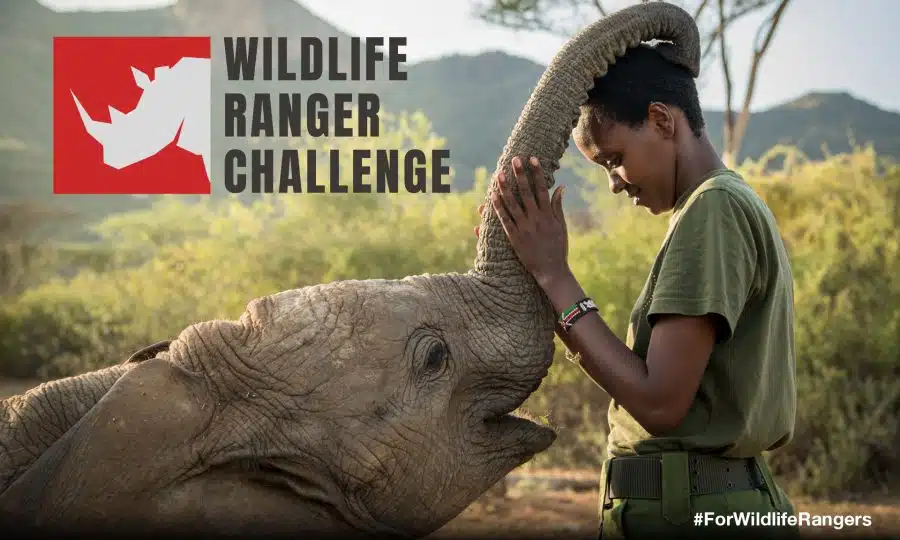
More than 2,000 wildlife and marine rangers from 21 African countries completed simultaneous half-marathons Saturday as part of a conservation campaign that organizers say has raised more than $25 million for rangers since 2020.
The seventh annual Wildlife Ranger Challenge brought together 166 teams for 21-kilometer (13-mile) races across some of Africa’s major conservation areas, with participants carrying operational equipment weighing up to 22 kilograms (49 pounds).
The event comes as Africa faces a significant shortage of rangers needed to protect its wildlife and natural areas. About 65,000 rangers currently work across the continent, compared with an estimated 345,000 needed to effectively secure protected areas and meet conservation targets, according to organizers.
The Wildlife Ranger Challenge, organized by conservation group Tusk and the Game Rangers Association of Africa, was launched during the COVID-19 pandemic in 2020 to help keep ranger teams operating.
It has since raised more than $25 million and supported or engaged more than 11,500 rangers. Organizers expect this year’s event to raise another $3 million, bringing the total to about $28 million.
“Today’s display of strength, discipline, and unity across Africa is a powerful reminder of what rangers endure every single day to protect our shared planet,” Tusk Chief Conservation Officer Chantal Migongo-Bake said.
She said rangers should be treated as frontline environmental workers and receive adequate equipment, pay, insurance and long-term investment.
Saturday’s races followed two months of training that included tactical quizzes and physical challenges. Regional events were held in Uganda, Kenya, South Africa and Zambia, with affiliated races taking place in other countries.
Kidepo National Park won both the men’s and women’s categories at the Murchison Falls hub in Uganda.
At the Lewa hub in Kenya, Mountain Bongo Project won the men’s race, IFAW Olgulului won the women’s category and Kenya Wildlife Service Team A took the mixed competition.
In South Africa, Marula North won the men’s race, Black Mambas took the women’s title and Southern African Wildlife College won the mixed category.
Results from the Kafue National Park hub in Zambia were not immediately available. The overall winner is expected to be announced early next week after organizers analyze race data from across the continent.
Rangers’ duties extend beyond combating wildlife crime and include ecosystem monitoring, search-and-rescue operations, community protection and responding to human-wildlife conflict.
Their role is also expected to become increasingly important as countries work toward a global target of protecting 30% of land and sea by 2030. Africa is home to nearly a quarter of the world’s terrestrial mammal species and one-sixth of its plant life, according to the organizers.
The challenge has also helped drive efforts to improve working conditions for rangers. The Ranger Welfare Standards Initiative, launched in 2024 by Tusk and the Game Rangers Association of Africa with support from the Royal Foundation of the Prince and Princess of Wales, has provided insurance coverage for 6,800 rangers. It aims to reach 10,000 by 2030.
“Rangers don’t ask for recognition, they simply get on with their work as essential planetary health workers, protecting nature and ecosystems, often in incredibly challenging circumstances,” Game Rangers Association of Africa CEO Louise de Bruin said.
Money raised this year, including matching funds from founding donor Mark Scheinberg, will go to participating ranger units for equipment, operational expenses, medical insurance and specialized training.

