

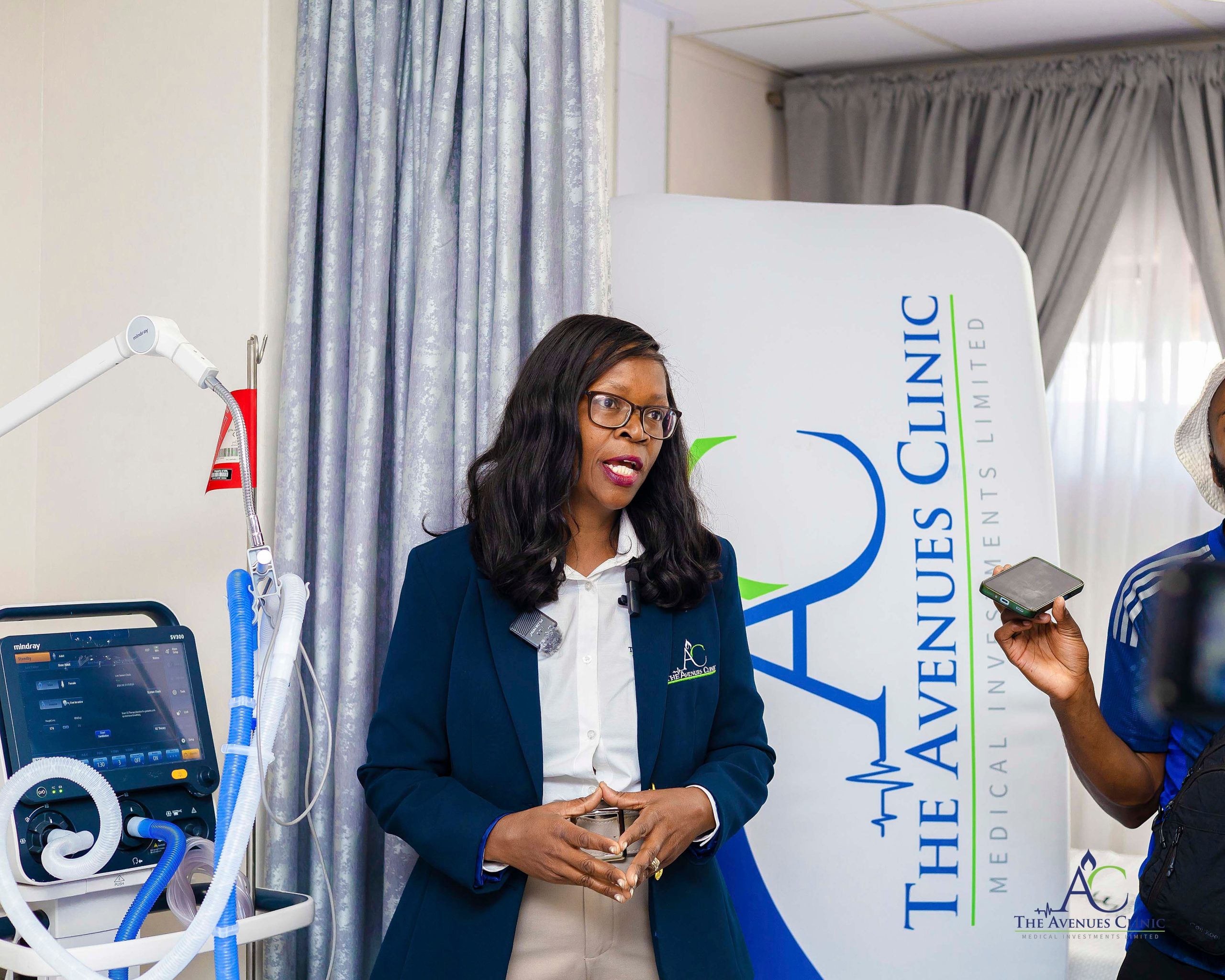
HARARE, Zimbabwe — The Avenues Clinic has invested about US$4 million in refurbishing its hospital facilities and plans to upgrade its operating theater in the coming quarter as part of an ongoing modernization program, a senior official said Monday.
The hospital on Monday unveiled its refurbished critical care unit following a US$500,000 investment that expanded dialysis capacity from one point to 13 and introduced new patient-monitoring technology.
Oscar Maradzamunda, Finance Controller at The Avenues Clinic, said the US$500,000 spent on the critical care unit covered infrastructure, equipment and bedding.
“In terms of the investment, we spent half a million into the critical care unit, and the investment was to upgrade our infrastructure and our equipment as well as the bedding,” Maradzamunda said.
“To date we managed to spend about 4 million into the refurbishment of our hospital. And our next plan is to upgrade our theater, and we are planning to do it in the next coming quarter.”
The refurbished section encompasses the Intensive Care Unit, High Dependency Unit and Coronary Care Unit. The Avenues Clinic lists ICU, HDU and CCU among its specialist critical-care services.
While the number of beds has remained unchanged, the clinic has significantly expanded the unit’s capacity to provide dialysis and ventilation to critically ill patients.
Sibusisiwe Ndhlovu, Managing Director of The Avenues Clinic, said the critical care unit previously had only one dialysis point, forcing medical staff to move patients when dialysis was required.
The refurbished unit now has 13 dialysis points spread across the ICU, HDU and CCU.
“Before we used to move a patient, the one was occupying where there is a dialysis point here. We’ll have to move them elsewhere so that we could dialyse the patient because we only had one point,” Ndhlovu said.
“So the big improvement is that we now have more points. We don’t need to be moving the patient, and it means that we can cater for more patients better, faster, and in a more comfortable environment.”
The clinic has also replaced bed-head units where medical gases, monitors and other equipment are connected, allowing equipment to be consolidated at individual bedsides.
“What this simply means is that all our machines are in one point. We are not sharing plugs, even in terms of safety for the patient, in terms of good clinical outcomes,” Ndhlovu said.
The upgraded facility includes Mindray patient monitors and new moisture-detection technology designed to alert nurses when moisture is detected in a critically ill patient’s bed.
Ndhlovu said the sensors are placed between the bed and mattress and can trigger alerts at nursing stations, allowing staff to respond when a patient who cannot assist themselves needs attention.
“Ordinarily, these patients have a nurse in front of them all the time, but sometimes a nurse might have to quickly go into the loo or want to go there and grab something,” she said. “So this will help the nurse to say there’s something happening with this patient, so they will quickly come and change them.”
Other improvements include expanded ventilation capacity, central patient-monitoring systems and an emergency pharmacy within the critical care unit.
Ndhlovu said some equipment was still outstanding because of shipment delays but was expected to arrive in the coming months.
She said the upgrades were intended to reduce the need to move critically ill patients around the hospital while also creating a more efficient working environment for nurses.
“Everything is one place,” Ndhlovu said. “Better patient outcomes, more convenient to the nurses, and also good for the patient in that they don’t need to be moved around.”
Maradzamunda said the broader US$4 million refurbishment program was supported by The Avenues Clinic’s board and shareholders.
He said the private hospital viewed its investment as complementing government efforts to improve Zimbabwe’s health system.
“We are complementing the government effort to make sure that our health sector is up to speed, and we upgrade and modernize our equipment,” Maradzamunda said.
The critical care refurbishment follows upgrades to other parts of the hospital, including its maternity facilities, with the operating theater set to be the next focus of the investment program.

