

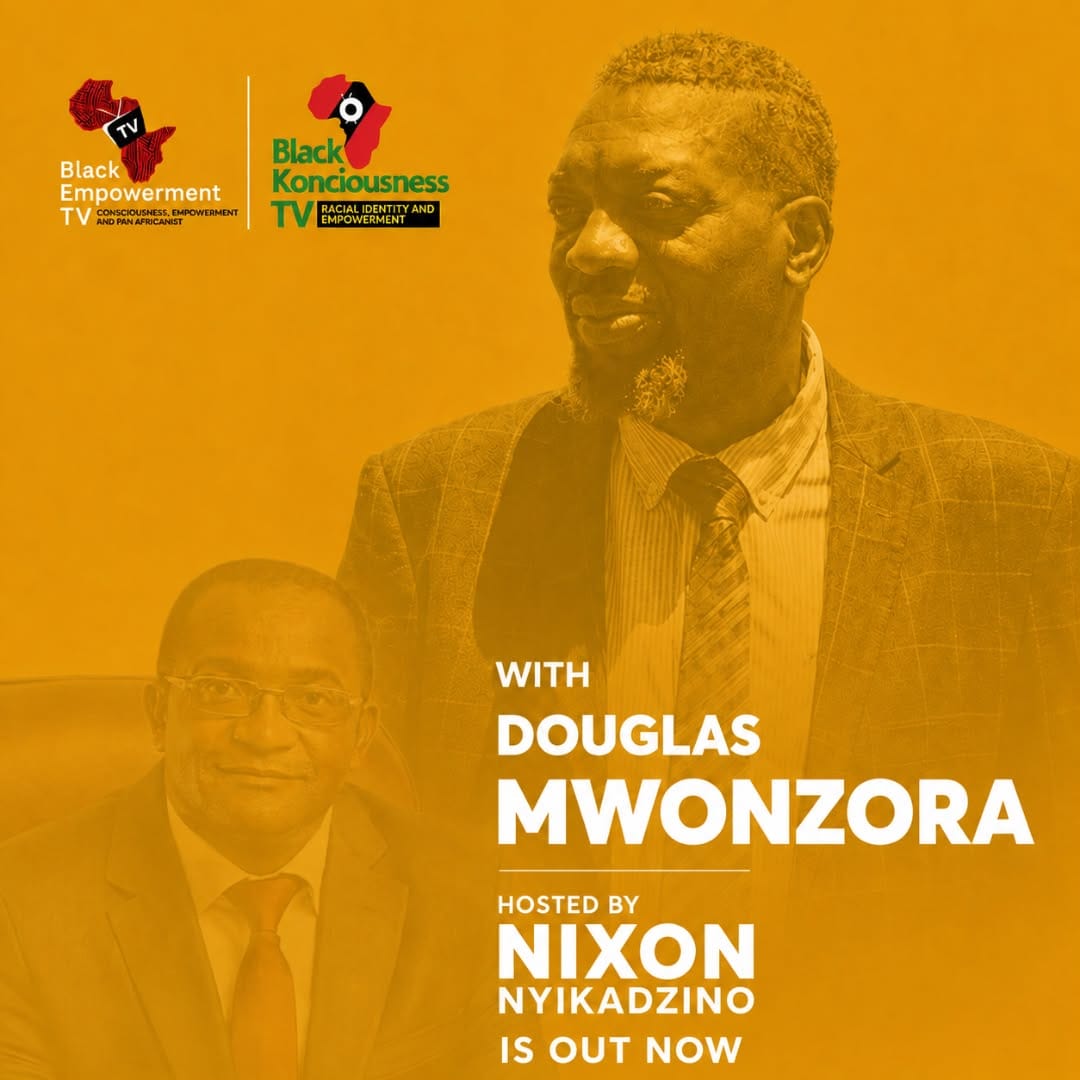
HARARE — MDC president Douglas Mwonzora has called for a new alliance of “progressive forces” to confront ZANU-PF, saying blanket opposition unity is a “myth” and Zimbabweans should combine court challenges with political mobilisation and demonstrations against Constitutional Amendment Act No. 3.
In a wide-ranging interview with Black Empowerment Television https://www.youtube.com/watch?v=cqfVvTJiMDc, Mwonzora also alleged that about nine clauses were inserted into Amendment No. 3 without going through public consultations, accused some opposition lawmakers of collaborating with ZANU-PF and vowed that Zimbabwe would “never be a kingdom” or a one-party state.
Mwonzora said the MDC was challenging Amendment No. 3 directly in the Constitutional Court, arguing that changes to the process of electing a president affect voting rights protected under Section 67 of the Constitution.
“We are saying before President Mnangagwa signed CAA3, he ought to have seen that it was taking away the right to vote from the general population to Parliament and therefore it was amending the Bill of Rights,” Mwonzora said.
“That is the argument we are advancing and therefore that section three must be declared invalid as it has been invalidly promulgated. Alternatively, if they want to insist on CAA3, they then have to refer it to referenda.”
Mwonzora said constitutional law expert Lovemore Madhuku had mounted a separate challenge focusing on provisions allegedly introduced without public consultation.
“Madhuku is attacking that, a discovery that I did not know until he filed his application, that there are about nine clauses that were smuggled into CAA3 that were not subjected to the public outreach, that was not in the bill that was gazetted by Speaker [Mudenda],” Mwonzora said.
“Nine clauses that were smuggled between Parliament and the President’s assent. In that gap nine clauses were smuggled in and Madhuku is attacking that.”
Mwonzora said the MDC deliberately waited until Mnangagwa signed the amendment before launching its challenge to avoid having the case dismissed as premature. He accused the Constitutional Court of relying excessively on technical grounds rather than determining substantive constitutional questions.
“The current constitutional court if given a chance will avoid work, go technical and sacrifice the substantive issues,” he said. “In other words, they are not developing the constitutional jurisprudence of our country and it is a tragedy.”
Despite pursuing the court challenge, Mwonzora said opponents of the amendment should not rely solely on litigation.
“We mustn’t give up on our rights to organize the people of Zimbabwe. Mobilize the people of Zimbabwe, our right to demonstrate,” he said.
“But time must come that we must gather the courage to go into the streets. So going to court is one method. Going to the streets is another method. Conscientizing our people is also another.”
Mwonzora also attacked CCC lawmakers who supported Amendment No. 3, accusing them of helping ZANU-PF secure the parliamentary votes it needed.
“The CAA3 was never for development. CAA3 is to amass state power by a group of people who have economic privilege,” Mwonzora said.
He described the CCC group in Parliament as “an auxiliary force of ZANU-PF” and accused its lawmakers of attempting to “rationalize their betrayal of the people of Zimbabwe by saying that this is for development.”
Turning to the wider state of the opposition, Mwonzora rejected the idea that bringing every opposition leader under one umbrella was necessarily the answer to ZANU-PF’s dominance.
“Unity of the opposition per se is not the answer,” he said.
“What is the answer is to have an opposition party that is consistent, that is well organized because some of the people you may call opposition leaders may not be opposition really. They may be people working for and on behalf of the state.”
Mwonzora did not identify those he was referring to.
“I don’t mention names here but I do know that there are certain elements who by their actions will show you that they are working to advance the interest of the state,” he said.
“Having said that, it still stands to reason that all the progressive forces, not everyone, forces who have demonstrated that they are for progress must come together.”
He said opposition leaders needed shared principles, mutual respect and mechanisms to reduce internal conflict before meaningful cooperation could take place.
“The opposition must be able to listen to one another. The conversation of opposition leaders in Zimbabwe is a typical conversation of the deaf. Nobody listens to the other,” Mwonzora said.
“So unity of the opposition as a panacea is a myth. What we need is the unity of progressive forces within the opposition.”
Mwonzora also rejected suggestions that Zimbabwe could eventually become a one-party state, saying attempts to establish such a system dated back decades.
“So one party state has always been on the agenda of ZANU-PF but it is defeatable,” he said.
Mwonzora also criticised rhetoric surrounding the “Munhumutapa” concept and Mnangagwa’s leadership, claiming Zimbabweans were being conditioned to accept an increasingly personalised system of rule.
“But there will be no one party state in Zimbabwe and Zimbabwe will never be a kingdom. We won’t allow that.”
Mwonzora said the MDC itself would hold a congress in 2027, with every leadership position open to contest.
“Every position is up for contestation including the president’s position,” he said.
Despite acknowledging that Zimbabwe’s opposition remained fragmented, Mwonzora rejected suggestions that it was incapable of mounting a future challenge to ZANU-PF.
“There are four years between now and 2030,” he said. “The opposition will get its act together and there is no need for us to support ZANU-PF because there’s nothing that ZANU-PF is doing that is worth supporting.”
You can see full interview here: https://www.youtube.com/watch?v=cqfVvTJiMDc

