


ZIMBABWE Civil Liberties and Drug Network (ZCLDN) has called on authorities to eliminate a criminalized response to drug possession to free-up the criminal justice system as repressive legislation will not make the drug problem disappear or reduce demand in communities.
Rather, ZCLDN urged drug reform efforts premised on increasing drug violators’ connection to health and social systems.
ZCLDN executive director Wilson Box believes decriminalising drug abuse will see dramatic drops in overdoses, HIV infection and drug-related crime.
The organisation estimates that 60% of young people age 16- 35 could have used or are using illicit substances with 30% of youth on Crystal meth, Guka, Makafela or Dombo.
United Nations Office on Drugs and Crime (UNODC) World Drug Report of 2013 estimates that there are 28 million drug users in Africa with Cannabis the most commonly used drug on the continent with a prevalence rate of 7.5%.
“Repressive drug law enforcement practices force drug users away from public health services and into hidden environments where HIV risk becomes markedly elevated,” Box told Editors during a two-day media workshop hosted by the National Aids Council in Chinhoyi last week
“The Dangerous Drugs Act (Chapter 15) in conjunction with the Criminal and Codification Act, Section 157, Chapter 9:23 has not been kept up-to-date with current thinking on how to tackle drug-related issues.”
“It is estimated that between 56% and 90% of drug users will be imprisoned at some point in their life. One in five prisoners are being held on drug-related charges; Prisons remain environments with high levels of drug use and high prevalence of HIV. Unprotected sex is more common. There are significant gaps in prevention, treatment and harm reduction services,” he said.
Box further said Illicit drug use and addiction are inextricably linked with HIV/AIDS, increasing the likelihood of high-risk sex with infected partners.
Turning to people who inject themselves with drugs, Box said this group is 22 times more at risk of HIV compared with the general population.
“Risk arises particularly from sharing needles, reinforced through criminalisation, marginalisation and poverty. On average one in ten new HIV infections are caused by the sharing of needles. Zimbabwe does not have data on the prevalence of injecting drug use,” he said.
Box also noted that poverty and drug taking are linked in a complex and mutually reinforcing manner while there is also an overlap between drug addiction and those involved in sex work in Central Asia.
Apart from decriminalising drug violation, ZCLDN urged authorities to immediately scale up addiction treatment and public health measures as well as Health education amongst the vulnerable groups, and state actors.
“The fight against HIV is being won in countries where addiction is treated as a health issue. In Australia and European countries such as Portugal and Switzerland, newly diagnosed HIV infections have been nearly eliminated among people who use drugs,” he said.
Zimbabwe recently launched the Zimbabwe National Drug Master Plan which seeks to address supply, demand, treatment and harm reduction of illicit substances in line with International Drug Control Conventions.
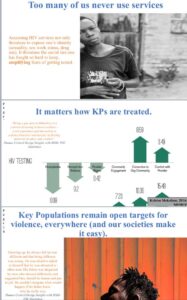
Key populations remain open targets for violence, media can do more to change perception
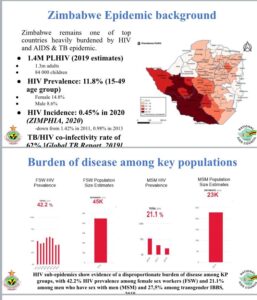
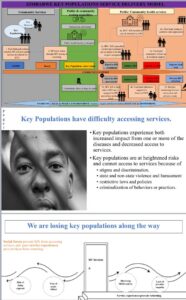
Key populations (KP) remain at heightened risks and cannot access services because of stigma and discrimination, state and non-state harassment, restrictive laws and policies, a National Aids Council official has said.
“The KP community is in need of proper visibility, so as to promote respect and understanding of diversity in terms of sexual behaviours, gender identity and sex characteristics,” National AIDS Council official Ricardo Bako told Editors during a media workshop in Chinhoyi last week.
“The media can be used in a positive, educational and awareness raising, way to change public opinions, promote equality of human rights and promote KP sensitive HIV/SRH services,” he said.
Globally, KPs and their sexual partners contribute 62% of new adult HIV infections (UNAIDS, 2019).
The UNAIDS 2021-2025 strategy calls for bold action to “put people at the centre to prevail against pandemics” and ensuring a human rights-based approach to development- leaving no one behind.
“It emphasizes the removal of structural barriers to access to HIV services to key populations and other vulnerable groups creating an enabling legal and policy environment to catalyse an effective AIDS response and addressing violence and gender inequality,” Bako noted.
The Government of Zimbabwe, through the Ministry of Health and Child Care (MoHCC) and National AIDS Council (NAC), is currently implementing a comprehensive package of prevention, treatment and support services for key populations in collaboration with KP led and KP serving Community Based Organizations, and funding partners.
The Zimbabwe National HIV/AIDS Strategic Plan IV 2021-2025, defines the following key
populations groups:
• Gay men and bisexual men and other men who have sex with men (MSM)
• Sex workers (SW) and their clients
• Transgender people
• People who inject drugs (PWID)
• People in closed institutions including prisoners
Scale up multi-disciplinary treatment to plug mental health effects
University of Zimbabwe Department of Psychiatry lecturer Dr Lazarus Kajawu has encouraged stakeholders and ordinary Zimbabweans to employ a multi-disciplinary treatment model in tackling the stressors that come with Covid-19 pandemic.
Observers note that the highly contagious virus will have profound impact not only in the health and economic situation, but also on the psychosocial well-being of societies across nations.
The impacts will be felt differently among different population groups.
In the current context of lock down and restriction of movements, Kajawu acknowledged that children have constrained access to socialization, play, and even physical contact, critical for their psychosocial wellbeing and development.
To support emotional wellbeing, Kajawu urged joint family activities for lockdown and manage frustrations by setting up realistic expectations.
Speaking at the same event Dr Teddy Mungwari encouraged effective communication across sectors.
“Health communication can promote behaviours and choices that can positively impact people’s general well-being and everyday lives,” Mungwari said.
“No matter how important the message, without expert communicators in public health, it may not reach the individuals and communities who need it,” he said.


