

Wire snare poachers maim lion, condemn elephant to excruciating death in Zimbabwe
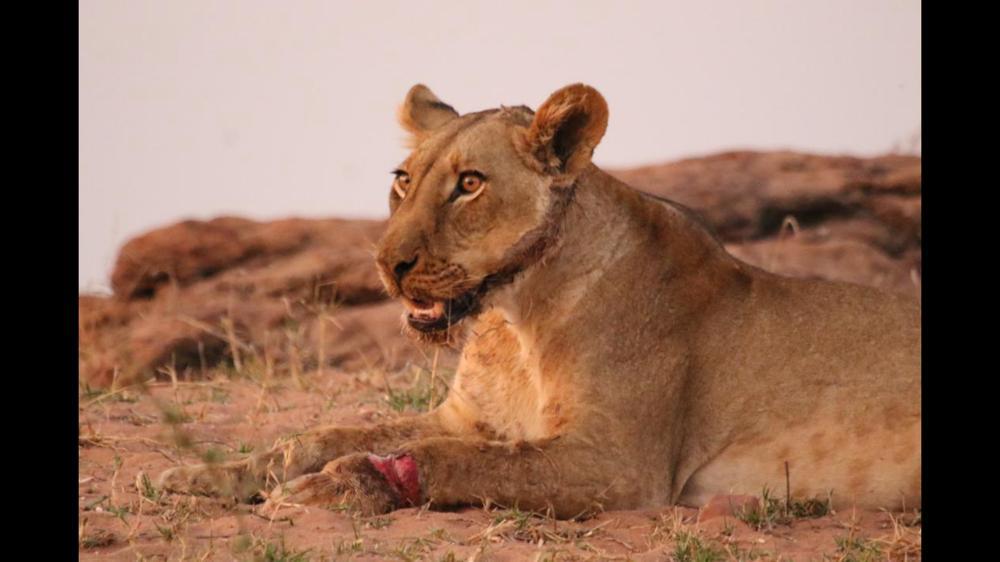
KARIBA – A two-year-old lioness is recovering slowly in northern Zimbabwe after breaking several teeth while trying to get free from a brutal wire snare that tore through her mouth and cheeks.
In Charara Safari Area, on the shores of Lake Kariba, a young female elephant which spent months badly snared, cut through around her neck and throat, was not so fortunate and recently succumbed to her injuries.
Kariba Animal Welfare Fund trustee Debbie Ottman said the elephant was spotted pouring sand on her neck to try and ease the pain.
“A team proceeded to dart the elephant to remove the embedded wire snare that had cut deeply into her neck and throat and cleaned up the wound, and treated it with strong antibiotics,” Ottman told Zim Morning Post.
“Sadly the young girl passed on after a month of treatment. Her prognosis was not good after removing the wire and finding that it had cut right through into her tranchea, a hole right through into her inner throat.”
“The only conciliation is that she had a few weeks of less pain having lived in extreme pain for some months with the deadly wire around her neck and cutting into her throat. Rest in Peace Shinga you are free of the brutal and vicious pain caused by poachers.”
The Trust said the patrols were removing about 50 plus snare wires a month in the in the areas they cover in the park with 418 snares having been removed in the year as at August 2022.
As for the lioness, Bumi Hills Anti-Poaching Unit (BHAPU) who saved her life, said she had broken several teeth in her desperate attempts to remove snare wire before being saved.
“The unimaginable suffering this young lioness had to endure is beyond comprehension. This is cruelty in its harshest form,” said BHAPU Base Manager, Catherine Norton.
“Najam is one of the ‘lucky’ ones, but there are many who are not as lucky,” she added.
“Her near-death encounter highlights the need to increase the capacity of the BHAPU team in order to conduct more snare patrols – finding and removing snares, and helping to protect fragile wildlife from these brutal devices.”
In the resort town of Victoria Falls, the Victoria Falls Wildlife Trust team on September 27 found a young elephant trapped in a snare “around the trunk that was so tight the animal was struggling to breathe.”
“Elephants breathe through their trunks not their mouths, and the sound was from the animal trying to breathe,” Victoria Falls Wildlife Trust said in a statement.
“The team quickly darted the struggling animal and fortunately the rest of the elephant herd moved away enough for the team to get in and remove the snare.”
Victoria Falls Wildlife Trust was again on high alert in early October attending to an elephant calf near the border post, which links Zimbabwe to Zambia.
“The young calf had a wire snare wrapped behind the front legs, stretching up to its shoulder line,” the Trust said.
The wire snare was attached to a big piece of metal which was dug into the ground confining the elephant calf to that exact position where it was snared, the Trust added.
Elsewhere, the Zimbabwe Parks and Wildlife Management Authority (ZimParks) Rescue and Veterinary Services Unit team at Hwange National Park was rescuing a Zebra after rangers found it snared by poachers.
According to ZimParks statistics at least 4523 snares were removed in the year 2021.
ZimParks spokesperson Tinashe Farawo said snare sweeps make up one of the biggest parts of anti-poaching in Zimbabwe.
“The more snares recovered, the less chance of animals meeting a slow and agonizing end,” he said.
Meanwhile, communities are finding innovative ways to impart anti-snare poaching education.
A joint venture between Wilderness Safaris and Ndau Jewellery Community Empowerment in Victoria Falls is teaching villagers to make jewelry from recycled snare wire.
It’s unknown how many animals die each year in Africa from snaring, but the number is estimated to be in the tens of thousands
