

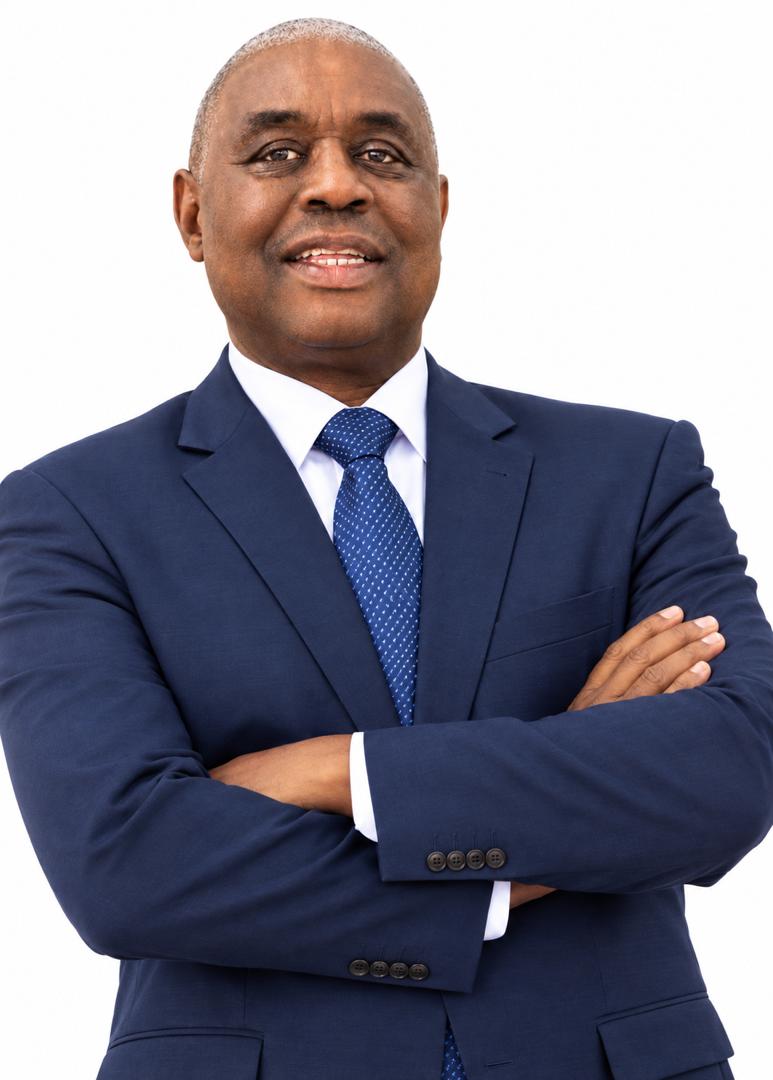
HARARE – Former Health Minister Obadiah Moyo has paid tribute to clinical scientist and businessman Owen Machamire, describing him as a meticulous hematology specialist whose laboratory results could be trusted by doctors making critical decisions about patients.
Machamire died after a short battle with cancer, only weeks after he was diagnosed.
Speaking at Machamire’s funeral on Monday, Moyo said the veteran laboratory scientist distinguished himself through his knowledge, professionalism and insistence on accuracy during a long career in healthcare.
Machamire specialised in hematology, the study of blood and blood disorders, and Moyo said his laboratory work demanded precision because doctors depended on test results to diagnose and treat patients.
“Owen used to produce the best quality results,” Moyo said.
“There are people you have to believe in and people you have to know that if you ask so-and-so to do that work, you will get the correct results.”
Moyo said laboratory scientists occupied a critical, though often less visible, position in healthcare because doctors frequently depended on their findings before determining treatment.
“He is the one who gave the determination to the doctor. The doctor had to wait for him for his results,” Moyo said.
“So Owen was important to our community. Very important, very knowledgeable.”
Moyo said Machamire understood that mistakes in laboratory work could have serious consequences and was rigorous about following proper procedures.
“It wasn’t a matter of guessing around. A person could end up killing someone,” Moyo said. “You must follow strict procedures and precise methods. Owen was professional in that respect.”
Machamire later established OM Medical Supplies, supplying products required by laboratories and health institutions.
His contribution to healthcare extended beyond his laboratory and business career.
At the time of his illness, Machamire was serving as chairperson overseeing Melfort Clinic, where local leaders said he regularly visited the facility to establish what was needed and worked to secure medicines and other supplies.
Goromonzi Rural District Council vice chairperson Spiwe Musekiwa, who worked closely with Machamire, said his death was not a loss to his family alone.
“It is not only the Machamire family that has lost. The whole community has lost,” Musekiwa said.
“The work he was doing at the clinic was very big. He was looking for medicines and would come and see what was going on.”
Musekiwa described Machamire as a dependable community leader who responded quickly whenever his assistance was required.
“With Mr. Machamire, whenever I requested his assistance to go somewhere locally to attend to something, Mr. Machamire would hurry,” she said.
“I didn’t even feel like I was working without a full team as a councillor.”
Moyo said Machamire’s community health work had also led to his selection as the National Men’s Forum’s provincial health coordinator for Mashonaland East, where Moyo serves as national health adviser.
The organisation had sought people capable of leading health programmes in each province, with Machamire selected for Mashonaland East based on his professional experience, qualifications and record in healthcare.
Moyo said plans were underway for Machamire to identify what Melfort Clinic required so that support could be mobilised for the facility.
“He knew how to run a simple hospital,” Moyo said. “Very, very innovative.”
Machamire had built a long career in medical laboratory science, including working at Parirenyatwa Hospital in Harare and stints with the National Health Service in London. He also underwent further training after returning from Malawi and specialised in hematology.
Moyo remembered him as academically gifted and knowledgeable in his field.
“He was a very clever man in class,” Moyo said. “Knew his subject well.”
Machamire also helped reconnect generations of laboratory medicine professionals, including veterans whose careers dated back to Zimbabwe’s early years of independence.
His longtime friend Charles Mungofa, who described himself as Machamire’s best friend, remembered a relationship stretching back more than four decades.
“I am Charles Mungofa. The man sleeping here is my best friend,” Mungofa told mourners. “You call him Owen; I would call him Chef. He would call me Chef.”
Mungofa said the two met in the 1980s and quickly developed a close bond.
“Since we first met in the ’80s, we struck a very strong bond,” he said. “What he did, I also did.”
Musekiwa said she was shocked by Machamire’s death because she had been working closely with him on community matters.
“I have suffered a great loss in losing someone I worked closely with, side by side,” she said.
Moyo said Machamire’s legacy could be seen across the different places and roles in which he served.
“Owen, wherever you worked, you made an impact,” Moyo said. “Wherever you worked, people loved you.”
“You did well, Owen. You did well. You’ve left a big hollow space.” He remembered Machamire not only as a respected scientist and colleague but as a friend

