

HARARE, Zimbabwe — Zimbabwe will join the international community in commemorating World IVF Day on July 25, highlighting the role of assisted reproductive technology in helping people overcome infertility and become parents.
This year’s global theme, “Celebrating Science, Hope and the Journey to Parenthood,” recognises the combination of medical innovation, resilience and emotional support involved in fertility treatment.
In vitro fertilisation, commonly known as IVF, has developed from a pioneering medical procedure into an increasingly accessible treatment for people from different backgrounds.
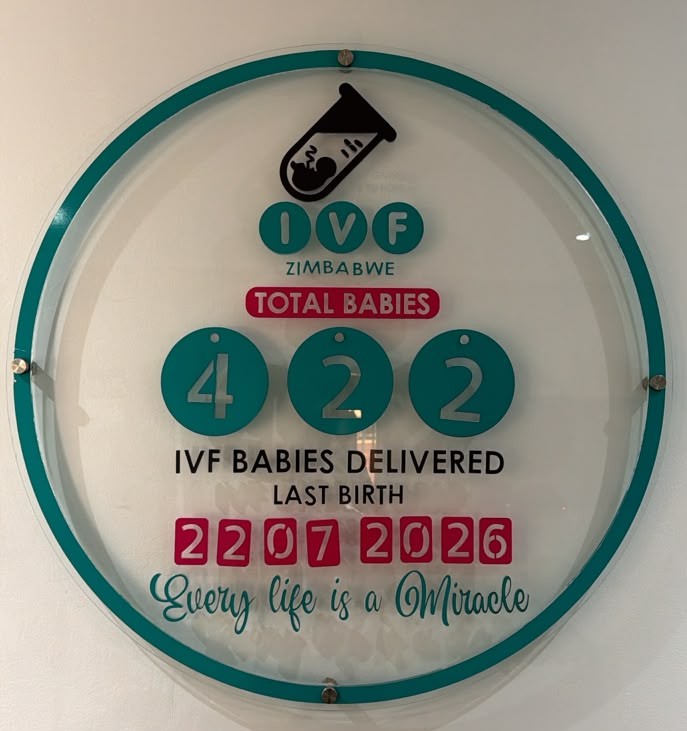
IVF Zimbabwe said 422 babies had been born through treatment provided by the clinic, reflecting both advances in reproductive medicine and the fulfilment of families’ hopes.
“Science is the foundation of IVF, but hope is its heartbeat. Every embryo transferred, every pregnancy achieved and every baby born is a reminder that science is not abstract but deeply human,” said Dr. Tinovimba Mhlanga of IVF Zimbabwe.
“It is about giving families the chance to hold their child, to hear laughter in their homes and to experience the joy of parenthood.”
Mhlanga said IVF should be understood as more than a medical procedure because many couples endure years of disappointment, stigma and discrimination before seeking help.
“Some face years of disappointment, stigma or even discrimination before seeking help. World IVF Day is about honouring that journey, recognising the strength it takes and celebrating the science that makes new beginnings possible.”
Infertility can have social and economic consequences in communities where childlessness is often accompanied by blame, isolation or abuse. Fertility treatment can help restore dignity and challenge the stigma experienced by both women and men.
Mhlanga said accounts from parents demonstrated that the clinic’s work extended beyond medicine.
“It is about humanity. It is about rewriting narratives of despair into stories of hope,” he said.
World IVF Day also promotes greater access to fertility treatment. IVF, once widely viewed as an option available only to wealthy families, has become increasingly affordable in Zimbabwe, attracting patients from across the region and Zimbabweans living abroad.
“Every child born through IVF is a symbol of possibility. On this World IVF Day, we celebrate not only the science that makes it possible, but the hope that sustains families and the journeys that lead them to parenthood,” Mhlanga said.
“Together, we affirm that science and humanity are inseparable and that through both, dreams can be realised.”

