

HARARE — Zimbabwean authorities have seized hundreds of cartons of illegal drugs and large quantities of prescription-only medicines, including steroids, during Operation Chenesa, revealing suspected illicit trading activities operating within unauthorised business premises across the country.
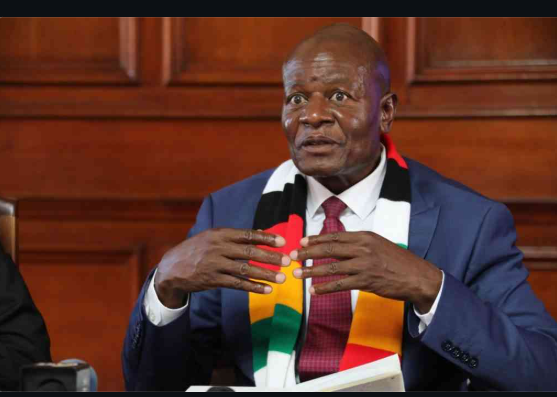
Local Government and Public Works Minister Daniel Garwe disclosed the seizures Wednesday as he released an update on the nationwide clean-up campaign, which has resulted in the demolition of 16,529 illegal structures and the arrest of 1,446 people.
The operation, being conducted across Zimbabwe’s 92 local authorities, has affected 35,365 illegal businesses and activities since its inception, according to figures released by the ministry.
“During the operation, the municipal police also seized hundreds of cartons of illegal drugs and substances, and vast quantities of prescription-only medicines; notably, several of these contained steroids, posing a grave threat to public health,” Garwe said in his Nov. 11 statement.
The discovery suggests that the campaign, initially presented as an exercise to restore cleanliness and order in urban centres, has also uncovered suspected illegal pharmaceutical distribution and drug-trafficking activities.
However, the ministry did not identify the drugs seized, disclose their estimated value or specify the locations where the substances were recovered.
It also did not establish whether the seizures were linked to organised criminal networks or how many of the 1,446 arrests involved drug-related offences.
Garwe said the government was targeting unregulated spaces that could provide opportunities for criminal activities, including the distribution of illicit substances.
The minister cited the Criminal Law (Codification and Reform) Act and public safety regulations as part of the legal framework supporting the operation.
He said the campaign was intended to eliminate illegal trading environments while improving sanitation, public health and safety.
According to the ministry, enforcement operations have also generated US$118,553 and 1,000 South African rand in fines.
“According to the latest statistics, a cumulative 35,365 illegal businesses and activities have been impacted countrywide since the commencement of the operation,” Garwe said.
“Some 16,529 illegal structures have been systematically dismantled and removed from unauthorized zones.”
The government says the operation is now entering a phase focused on establishing designated vending facilities in all 2,500 wards nationwide, while existing dilapidated markets will be renovated.
Garwe maintained that the campaign was not intended to demolish residential homes, rejecting claims circulating on social media.
“Rather than demolishing houses, our focus is entirely on ensuring order and better structures for the vendors themselves,” he said.
He also accused unnamed council officials of misleading the public about the operation.
“We are equally concerned that some council officials are feeding the public wrong information,” Garwe said.
The minister insisted that the programme was an administrative enforcement exercise aimed at restoring order across local authorities rather than a politically motivated initiative.
“Operation Chenesa is an unyielding, non-negotiable instrument of good governance,” he said.
The disclosures raise further questions about the extent to which unauthorised trading spaces are being used for activities beyond informal commerce, as the government presses ahead with its nationwide enforcement campaign.

