

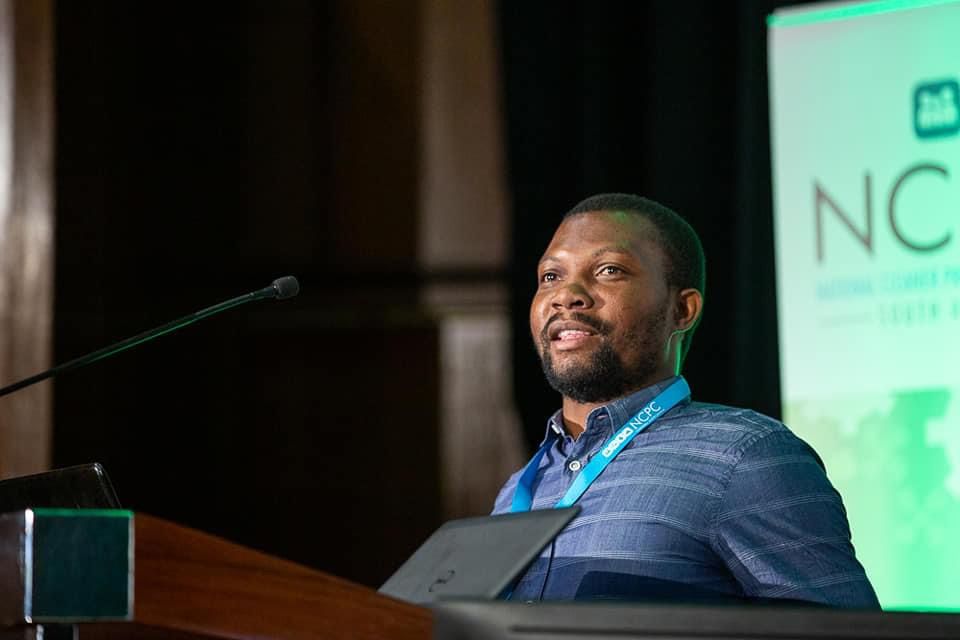
I am a sustainability person all round: Muzamwese
International consultant Tawanda Collins Muzamwese is an environmental, health, energy expert who also writes on topics outside his forte. Muzamwese, who is the former Executive Director of Business Council for Sustainable Development Zimbabwe, currently runs Toxiconsol, a company that offers consultancy in sustainable business development and he has massive experience in training, consulting and auditing.
Zim Morning Post spoke with Mr Muzamwese (TCM) about his life, writings and professional career and below are excerpts of the interview.
QUESTION (Q): I understand you took advantage of the stringent Covid-19 restrictions to pen several books. Can you explain to readers?
ANSWER (A): When the Covid-19 pandemic broke out, I began to take my writing seriously because we would spend long periods idle. Of course, I used to post some of my writings on my LinkedIn and Facebook but I have written five books now in the past 18 months or so. The first one was Leading Consultant: How to Become an Authority in Your Professional Field and tells you how you start up, how to talk to clients, how to consult at a global level among other issues.
The second one was Step-by-Step Guide to Implementing Safety, Health, Environment and Quality Management Systems and then Stepping on Higher Perspectives: Greatness Tips Motivational Series – which in fact was the first book that I wrote but published third. Then came Sustainability Guidebook for Boards and CEOs: Leading From the Front, which again is a technical book. Most companies have problems because their boards are not concerned. A fish rots from the head. It’s a quick read.
The latest one How to Develop a Side-Hustle into a Viable Business: Overcome Salary Dependency. In it, I want to teach people to avoid the rat race. I am not saying that people should not work, they should but should ask themselves what they have that is theirs, something that can come from a side
hustle.
From when the pandemic started, the lockdowns from March 2020 until now I have written five books. I have not stopped there. I launched the Green Business Gazette, the only environmental magazine from the private sector. But we have only just begun.
Q: Do you have any current project and when do you expect it out?
A: I am currently working on another title, which will be my sixth, titled How to Manage Your Boss. It is not about managing your boss in the literal sense of the word but it is an emotional intelligence book. It’s a guide for professionals who are in the work environment they sometimes you get a supervisor who isocratic, jealous, the book will guide you how to navigate such environments. If your supervisor is an angry bull you do not become an angry bull as well. A lot of people have had to resign from their jobs because some may allow you to grow, advancing yourself academically as well as professionally
Q: Most people write after being inspired through others’ work. Is that the case with
you?
A: True. Robert Kiyosaki is one of the authors who have impacted me significantly. His books, Rich Dad Poor Dad and The Cashflow Quadrant had a lasting impression on me. I began seeing the reality. John Maxwell’s How Successful People Think is another one.
Locally, Milton Kamwendo, Arthur Marara and Cynthia Hakutangwi among others have contributed immensely towards developing others. When you look at these people, you begin to change yourself. The good thing these days is that you do not need a publishing house. If you have a manuscript within 72 hours, you are live on Amazon. I would like to thank institutions like Amazon for creating space and
breaking barriers. Someone can publish and access international markets – benefits of globalisation. We also need to thank the National Archives of Zimbabwe for playing their part in the equation.
Q: But who is Tawanda Collins Muzamwese?
A: Tawanda Collins Muzamwese is a 35-year-old Zimbabwean man who was born of an engineer father and a teacher – the first child in a family of three – in Mutasa District in the eastern Highlands and grew up at Chitakatira in Zimunya communal lands. At an early stage, both my parents left the country to pursue tertiary education – with my father going to the then Soviet Union while my mother was in Cuba. As such, my early years were spent living with my grandparents. I am a family man, married to Ruvimbo Patience Muzamwese and together we have a beautiful daughter – Maya Tadiswa. I love football and used to play during my school years. I also do music.
My primary education began at Chitakatira Primary School, a humble institution that shaped who I am today with the desire to achieve excellence, one of the key traits that grew in me at this rural school. I developed the ethos of hard work and not being satisfied with being average. But, when you are rural based, you have to fight extra hard, be in education, work or otherwise. Those formative stages of my life helped build character for me so that I began to understand that even with limited resources, I had to get the best out of me. I work with what is there.
After a long absence, my parents returned to establish themselves permanently in Harare and I would occasionally visit them during the holidays, eventually moving schools and joining David Livingstone Junior School from 1996. For my high school, I went to St Augustine’s, a school that some of the country’s greatest minds passed through, the likes of national hero Herbert Chitepo and the first black female medical practitioner, Dr Madeline Nyamwanza-Makonese among others.
Q: St Augustine’s has been a popular institution for years. What values did the school inculcate in you as a young man?
A: My time at St Augustine’s therefore becomes quite a symbolic period in my life because it then shapes the bigger part of my character, resilience an Anglican institution built around moral values, respect, belief, brotherhood and sharing, brotherhood, religion and spirituality qualities that are difficult to find in today’s young people.
Signs of writing, the signs of writing began to show. The school librarian a Mr Munemero, who was a strict disciplinarian and was very systematic and introduced the culture of books at St Augustine’s I wrote a poem about a man who died very young. Ironically, my father passed on soon after I finished university.
Q: And after you left St Augustine’s (kwaTsambe) (St Augustine’s, where did you go next?
A: Schools have a bias towards sciences but succeed in every field. But as we do career guidance for children, we should do that with an open mind. My parents wanted me to be a medical doctor but after “A” Level I missed Medical School by a couple of points and went to study Applied Environmental Science. The challenge that many see is that when they see other people succeed, they push their children into those careers. We must never push our children into particular discipline.
In the beginning, I cut a frustrated figure since I thought I would pursue a degree with glamour but trends and dynamics change. In certain seasons, marketers will be making it. It is always difficult to tell which field will pay. Who ever imagined that most work will be done by computers today? We now have self-driven cars in other countries. Within a few weeks at the University of Zimbabwe, I found peace after researching on the Applied Environmental Science programme.
I discovered that environmental issues were becoming significant. I actually found that I was in the
right place and made up my mind that I would graduate with very good grades. I spent three years at the University of Zimbabwe. I am a philosophical person, I am self-motivated, thrive on challenges, to make history, especially in difficult circumstances.
In 2008, I graduated with a First Class and as the top student in the programme. My earlier disappointment with the programme was out of ignorance and that is the problem with most parents. They force their children into programmes they have limited information about. It was during this period that this obsession of going international. My father passed on a year later in 2009.
Q: That was very sad. But the fortunate thing is that you had completed your undergraduate studies.
A: In 2009, I announced my arrival in the environmental career. I worked for Scientific and Industrial Research and development Centre (SIRDC) as a research scientist focussing on environmental issues, helping companies with waste water, pollution chemicals, helping companies comply with Environmental Management Agency (EMA) regulations. I received the job quite gracefully. I then stepped up my
desire to go international and after one year five months, I got a scholarship to do a Master’s in Environment and Energy Management with the University of Twente – a multi-cultural institution – from the Dutch government.
It was interesting to go to The Netherlands, one of the greenest economies in the world – a place that taught me efficiency. It was my first time in Europe and provided me with a rare opportunity of
exposure and learning to tolerate others. The people who succeed are those who dream, people who take risks even in the Bible there are examples. There are a lot of canals. I enjoyed football, music, personal writing. I began to realise that I was someone who could develop this culture of writing. I went to Germany for my internship. That same boy from Chitakatira was now in Europe.
Q: Brushes with foreign lands have not always had the same impact in people. When you came back to Zimbabwe, what did you encounter?
A: I came back to Zimbabwe in 2011 after receiving my Master’s of Science degree with a Cum Laude, the highest level of academic accomplishment, which in other words could be referred to as a distinction. As I tell my story, I remind people that their future is in their own hands. I joined Ironwod Consultancy where I met Givemore Chinomona, one of the leading consultants in Zimbabwe. That company
because it was doing very interesting things. I worked for just about a year before leaving employment at the age of 27 on 28 February, 2013. The inspiration was my background and I had decided not to work
over five years.
It was not an easy decision to make. Many friends, relatives were surprised at the move but I told them that my purpose was not to be transformed but to be a transformer, a conformer not to conform and register Toxiconsol and this is the company that I lead. The name Toxiconsol: African Sustainability Consultancy came up while I was in the second year at the University of Zimbabwe.
Today, Toxiconsol employs a number of young people here again showing that dreams can be achieved. We started without a single chair. We help investors with time expanded into health and safety as well as quality management and ISO certification.
We have served over 100 companies drawn from mining, construction and manufacturing among other sectors. Although I spent six months without getting a single contract but work began to flow when we got our first contract. This organisation is a think tank on environmental issues.
I have been to many countries such as Kenya, Israel, United States, China and South Korea among others. It was in Israel that I learnt for the first time that sea water can be taken after it goes through a process called desalination. At times people must volunteer because they gain a lot from interactions with other people. My message for young people is that you must not always do things for money as this is being short-sighted. I advise companies, development banks and governments. In the past, I have served as Director for Business Council for Sustainable Development Zimbabwe. I lectured at the University of Zimbabwe and the Zimbabwe Institute of Management.
Q: Do you have any plans of leaving Zimbabwe and settling elsewhere?
A: I believe I can still make an impact in Zimbabwe. I want to be part of that process of building my country. Besides, today with remote working, you can support global organisations from anywhere in the world. I also respect the aspect of family and Ubuntu, things you do not find in other places. I am proud to be African. I am a sustainability person all round and I would want to be involved in changing my country for the better, sustainability-wise, so that it becomes a better place for all of
us.


