

Royal Family gold mine controversy deepens as judge condemns “reprehensible” corporate conduct, alleged industrial-scale gold extraction continues under scrutiny, and questions mount over Generous Resources, police enforcement and environmental compliance.
BULAWAYO — What began as a bitter dispute over a lucrative gold mine in Filabusi has escalated into an extraordinary confrontation between judicial authority and a network of business interests accused of behaving as though Zimbabwe’s mining laws, company regulations and court orders are obstacles to be circumvented rather than obligations to be obeyed.
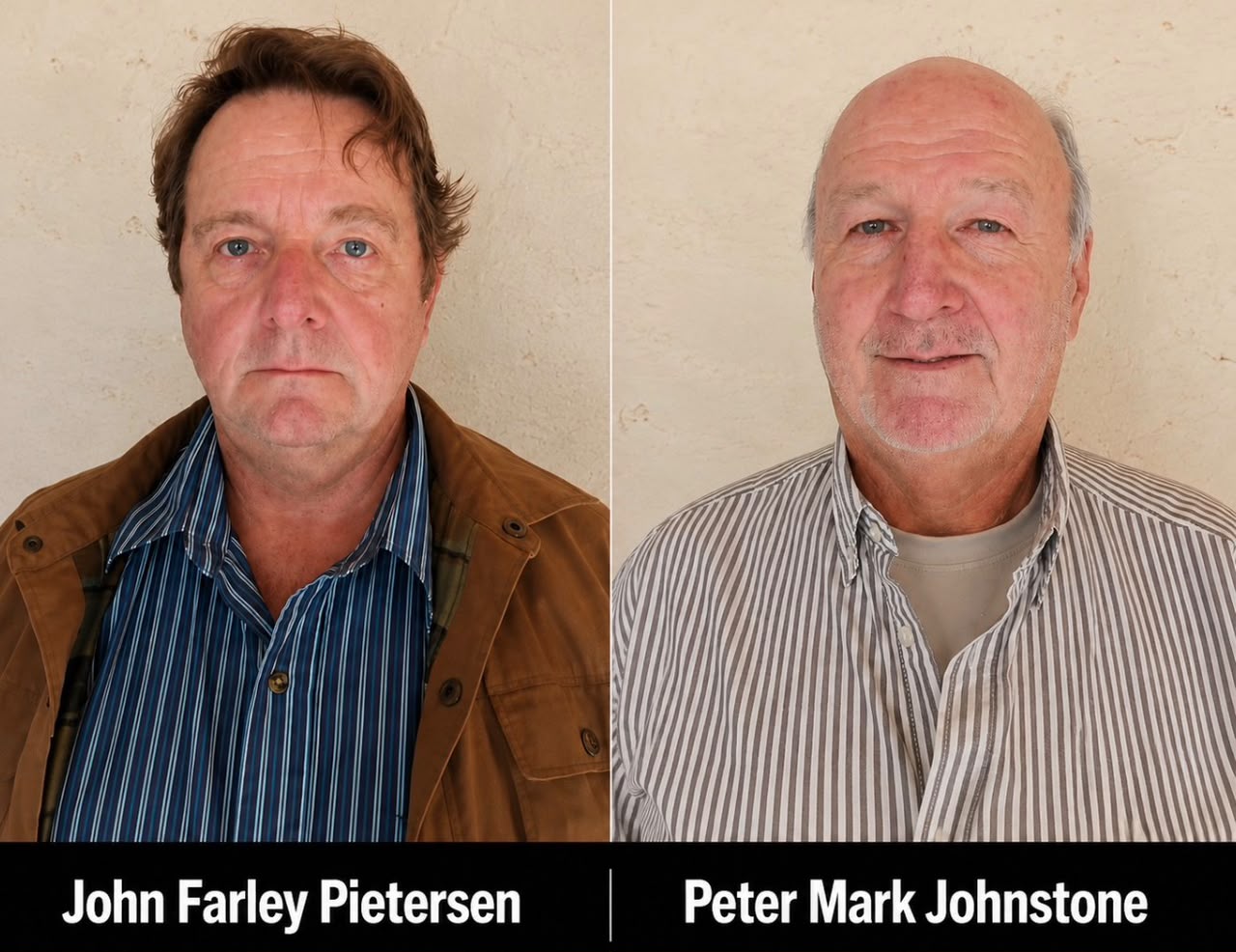
At the centre of the controversy are businessman John Farley Pietersen, his associate Peter Mark Johnstone and Generous Resources, the mining company associated with Chinese businessman and chairman Zuo Wenzhong.
The three business interests now face mounting scrutiny following a devastating High Court judgment that condemned Pietersen and Johnstone for what the court described as “reprehensible conduct”, dishonesty and a “blatant abuse of the court process”.
The court decisively rejected their attempts to assume control of All Aflame Marketing (Private) Limited, the lawful holder of the Royal Family gold mining claims in Matabeleland South.
But the implications extend well beyond a discredited corporate takeover.
The judgment also affects mining operations associated with Zuo and Generous Resources, whose presence at Royal Family has become a central feature of allegations that valuable gold deposits were commercially exploited despite earlier judicial restrictions.
The complainants allege that extensive mining and heap-leach processing activities continued in defiance of court orders, resulting in losses running into tens of millions of United States dollars.
They further allege that the disputed operations lacked the necessary environmental approvals, raising troubling questions about the legal and regulatory basis upon which substantial gold-processing infrastructure was allowed to operate.
The emerging picture is one of an alleged axis of impunity, involving disputed corporate authority, contested mining operations and persistent questions over whether regulatory and law enforcement institutions have responded effectively.
For Filabusi, a district that has long escaped the level of scrutiny directed at Zimbabwe’s better-known mining centres, the controversy threatens to expose a much wider crisis of accountability.
ZUO WENZHONG AND THE GENEROUS RESOURCES CONNECTION
While Pietersen and Johnstone have attracted the most explicit judicial condemnation, the role of Generous Resources and its chairman, Zuo Wenzhong, demands equally close attention.
The company is associated with a substantial heap-leach operation at the disputed Royal Family claims, where the scale of mineral processing has raised questions about the value of gold allegedly extracted and the commercial benefits derived from the occupation of the property.
Unlike informal gold panning, heap leaching involves organised industrial processing, significant capital expenditure, specialised equipment and the handling of large volumes of ore.
The presence of such infrastructure raises a fundamental question: how could a commercial operation of this nature allegedly continue on claims whose ownership and operational authority were being contested before the High Court?
More importantly, what was the legal basis upon which Generous Resources believed itself entitled to conduct mining and processing activities after the courts had intervened?
The latest judgment expressly affects those claiming occupation or mining rights through Pietersen and provides for their eviction if they fail to comply.
Consequently, Zuo and Generous Resources are no longer peripheral figures in a corporate dispute between other businessmen.
Their interests are directly implicated in the practical enforcement of the court’s decision.
The High Court’s declaration that All Aflame Marketing is the sole lawful holder of the Royal Family claims leaves pressing questions about any continuing activities carried out without the company’s authorisation.
Any claim that Generous Resources remains entitled to operate must be measured against the precise terms of the judgment and any independently established mining rights.
The commercial scale of the alleged activities makes the matter especially consequential.
If the claim holders’ allegations are substantiated, the controversy would concern not merely unlawful occupation, but the possible extraction and commercial disposal of substantial quantities of gold belonging to a legally recognised mining-rights holder.
GENEROUS RESOURCES: NOT ITS FIRST CONTROVERSY
The Royal Family dispute is not the first occasion on which mining interests associated with Zuo Wenzhong and Generous Resources have attracted allegations concerning compliance with Zimbabwe’s gold-sector laws.
In 2025, reports published in Zimbabwean media linked Zuo-associated mining interests, including Podhill (Private) Limited in the Silobela area, to allegations of undeclared gold production and irregular mineral sales.
The reports alleged discrepancies between recorded gold output and the volumes purportedly processed through mining and recovery facilities.
Generous Resources was identified in those reports as having a shareholding connection to Podhill.
The allegations concerned gold potentially worth more than US$10 million and raised questions about production declarations, mineral accountability and compliance with Zimbabwe’s formal gold-marketing system.
However, subsequent reporting strongly disputed the accusations, alleging that the material underpinning some of the claims had been fabricated following a dispute between former associates.
The competing accounts mean the allegations cannot be treated as established findings of criminal conduct.
Nevertheless, the earlier controversy is relevant to understanding why the emergence of Generous Resources in another high-value mining dispute is attracting renewed attention.
The issue is not whether earlier accusations prove present wrongdoing. They do not.
Rather, it is why business interests previously exposed to serious public allegations concerning gold accountability are now involved in another contentious mining operation in which lawful ownership, court-order compliance and mineral production are being questioned.
For Zuo, the scrutiny now extends beyond the company’s commercial relationship with Pietersen.
It reaches directly into the governance of Generous Resources, its operating arrangements, its environmental compliance and the accounting of any gold recovered from Royal Family.
The chairman’s responsibilities and knowledge of the operation warrant careful examination.
PIETERSEN’S RECORD OF CONTROVERSY
For John Pietersen, the High Court’s ruling adds to a history of legal disputes concerning Royal Family and other alleged misconduct.
In 2023, Pietersen appeared before the Filabusi Magistrates’ Court facing allegations of malicious damage to property arising from an incident at Royal Family Mine.
The case followed accusations that a front-end loader had been used to discharge ore onto a concrete platform where All Aflame Marketing was developing office and storage facilities.
Damage was reportedly estimated at US$1,200.
Pietersen disputed wrongdoing, reportedly maintaining that the property concerned belonged to him.
The final outcome of that prosecution has not been independently established.
The continuing uncertainty surrounding the case is significant in light of the later corporate and mining disputes.
It raises legitimate questions about the handling of complaints between competing mining interests and whether earlier interventions were sufficient to prevent further confrontations.
Separately, Pietersen and his son, Liam Farley Pietersen, have faced an assault prosecution in Bulawayo following an alleged confrontation with security executive Bekezela Moyo.
Both have denied the allegations.
As of the latest publicly verified reporting, the final outcome of those proceedings was not established.
The accumulation of legal disputes is not proof of guilt. It does, however, make transparency about their disposition particularly important.
In the Royal Family corporate proceedings, the position is materially different.
There, the High Court has already made explicit adverse findings against Pietersen and Johnstone.
A JUDGE’S WITHERING CONDEMNATION
The High Court was unsparing in its criticism of Pietersen and Johnstone’s attempts to assume control of All Aflame Marketing.
The businessmen had relied on a default judgment purportedly giving them a combined 57.45 percent shareholding in the company.
They subsequently sought to remove directors David Peter Easterbrook and Allan Brent Dolan and install themselves in positions of corporate authority.
The court found that the underlying proceedings were fundamentally defective, including because legal papers had been purportedly served at premises the defendants knew were no longer occupied by the opposing parties.
The judge described the defendants’ attempts to retain the benefits of that judgment as reprehensible.
“Their reprehensible conduct ought to be frowned upon. As I found in HCH 2600/26, they clearly snatched at judgment and unreasonably sought to cling to it.”
The court also rejected their explanation for serving legal documents at the former business address.
It described the argument as “completely unmerited and, in fact, dishonest”.
The judge further condemned the defendants’ inconsistent explanations for purportedly removing Easterbrook and Dolan as directors.
When challenged about a company registration form alleging that the directors had resigned, the defendants advanced an alternative claim that they had been removed through a shareholder resolution.
Yet the court found no evidence establishing the lawful procedure upon which that explanation depended.
“The pursuit of their frivolous defence was a blatant abuse of the court process,” the judge declared.
“All they purportedly did in the comfort of their offices stand on sand and are clear legal nullities.”
The remarks amount to an extraordinary judicial repudiation of the disputed corporate manoeuvres.
For Pietersen and Johnstone, the ruling is an emphatic defeat.
It also provides a powerful legal backdrop against which the conduct of those claiming mining rights through their purported authority must now be examined.
THE COURT SPOKE. DID THE MINING STOP?
Arguably the most troubling aspect of the Royal Family controversy concerns allegations that earlier judicial orders did not bring the disputed mining activities to an end.
In June 2026, Justice Tawanda Chitapi granted provisional relief restricting Pietersen, Johnstone and persons acting through them from conducting mining activities at Royal Family pending determination of the litigation.
Nevertheless, allegations emerged that extraction and processing continued.
On June 26, 2026, ZimTimes reported on footage purportedly showing mining activities taking place after the injunction.
The footage and the timing of the reported activities require independent verification.
All Aflame’s complainants maintain that the restrictions were disregarded and that operations associated with Pietersen and Generous Resources persisted despite the court’s intervention.
If confirmed, the allegations would represent a serious challenge to the authority of the judiciary.
Court orders cannot be treated as optional merely because the parties subject to them disagree with their consequences.
The final judgment now strengthens the legal position of All Aflame Marketing and provides for the eviction of those occupying the mining claims through Pietersen.
Whether all affected parties have complied, and whether activities continue in breach of the applicable orders, must be established through current inspection and enforcement records.
INDUSTRIAL-SCALE GOLD EXTRACTION OR INDUSTRIAL-SCALE APPROPRIATION?
The financial implications are potentially staggering.
All Aflame’s claim holders allege that the continued extraction and processing of gold-bearing material caused losses running into tens of millions of dollars.
If the gold was recovered without lawful authority and subsequently sold, the operation could potentially form the basis of substantial claims for compensation and other legal remedies.
The allegation is particularly serious because the activities described involve an established commercial processing operation rather than sporadic small-scale mining.
The volumes of ore processed, gold recovery rates and ultimate disposition of the metal are therefore matters of substantial public interest.
Who purchased the gold? What production returns were submitted? Which companies received the proceeds? What records exist of deliveries to authorised buyers?
And, critically, how much mineral-bearing material was extracted after the relevant court restrictions took effect?
These are questions that should be answerable through production records, invoices, gold-delivery statements and independent metallurgical assessments.
The allegation that industrial-scale mineral theft is occurring remains unproven in the absence of those records and a determination of the relevant legal rights.
But the seriousness of the allegation demands an equally serious investigation.
ENVIRONMENTAL COMPLIANCE: ANOTHER LOOMING QUESTION
The environmental consequences could prove just as significant.
All Aflame’s complainants allege that Pietersen, Johnstone and Generous Resources lacked the necessary Environmental Management Agency authorisation for the disputed operations.
Zimbabwe’s environmental legislation requires prescribed mining projects to undergo environmental assessment and obtain the relevant approvals.
Heap-leach installations demand particular care because of the potential effects of chemical processing, containment failures, seepage, effluent management and soil or water contamination.
The complainants allege that the operation has caused environmental degradation, creating potential rehabilitation costs in addition to the claimed mineral losses.
An absence of environmental approval, if confirmed, would present serious compliance concerns.
However, the precise status of the applicable EMA certificates, other operational permits and any pollution findings must be established directly with the regulator.
Zuo and Generous Resources should be asked to produce the authorisations upon which they relied, including their scope, validity and the locations covered.
A comprehensive environmental inspection would also be necessary to establish whether the site has suffered damage and the extent of any remediation required.
ZRP FILABUSI: QUESTIONS THAT DEMAND ANSWERS
The controversy has increasingly placed the enforcement response of the Zimbabwe Republic Police in Filabusi under scrutiny.
The central issue is whether complaints arising from the mining dispute and court orders restricting activities at Royal Family have been handled promptly, consistently and impartially.
The complainants have questioned whether Pietersen has been permitted to exercise disproportionate practical influence over activities in the district.
They have also raised concerns about whether local policing responses have been sufficiently effective to protect the rights subsequently affirmed by the High Court.
Allegations that police officers were compromised would require evidence of specific officers, transactions, improper instructions or deliberate failures to perform official duties.
Such evidence has not been independently established in the material reviewed.
The questions nevertheless warrant direct answers from ZRP.
What became of the earlier malicious-damage complaint? Were police formally notified of the provisional mining injunction? Were complaints of subsequent non-compliance investigated? Were officers deployed to verify the alleged continued activities?
And what measures are being taken to ensure the final High Court order is enforced?
A lack of satisfactory answers would only deepen public concern.
Filabusi police should be afforded an opportunity to explain their handling of the matter, while any substantiated allegations of misconduct should be referred to the appropriate investigative authorities.
The credibility of law enforcement depends not only on its readiness to act, but on its willingness to demonstrate that it acts without favour.
AN UNNAMED INTERMEDIARY AND REPORTED OVERTURES
A further development now being alleged by sources familiar with the dispute concerns attempts to establish contact with the lawful claim holders through an intermediary described as a Lebanese national.
According to the account provided, the approach is understood to have occurred against the backdrop of increasingly adverse legal developments affecting the disputed mining activities.
The individual’s identity is being withheld.
The precise purpose of the reported communication, the party on whose behalf the intermediary was acting and whether any substantive proposal was conveyed have not been independently verified.
It would therefore be premature to conclude that the approach constituted an admission of wrongdoing or an attempt to avoid impending legal action.
Nevertheless, if documented, the communication could prove relevant to understanding the commercial and legal response of the parties affected by the High Court’s ruling.
The immediate question is whether those reportedly seeking contact are simultaneously complying with the court’s orders.
Any negotiations over the future of the operation cannot replace the obligation to respect judicial decisions.
AN AXIS OF IMPUNITY UNDER SCRUTINY
The central issue emerging from the Royal Family controversy is not simply whether three businessmen or their associated companies have been involved in a contentious commercial dispute.
It is whether competing claims of corporate control were used to sustain access to valuable mineral resources despite the absence of lawful authority subsequently affirmed by the courts.
The High Court has already rejected Pietersen and Johnstone’s disputed corporate manoeuvres in uncompromising terms.
What remains is to determine the extent of Generous Resources’ activities, the basis upon which Zuo’s company operated, the volume and value of gold extracted, and whether the relevant environmental and legal requirements were met.
Those questions are especially important because the alleged scale of the operation suggests a commercial enterprise capable of generating substantial revenue.
If wrongdoing is established, accountability cannot logically stop at the individuals whose names appear on disputed company registration documents.
It must extend to every person or corporate entity shown by evidence to have knowingly authorised, financed, facilitated or benefited from unlawful operations.
Equally, those accused must be given the opportunity to answer the allegations and produce evidence supporting their positions.
This is ultimately the test for Zimbabwe’s mining-sector governance: whether the law can be enforced consistently, regardless of the resources, commercial connections or local influence of those involved.
FILABUSI CAN NO LONGER ESCAPE SCRUTINY
For years, Filabusi’s mining controversies have rarely commanded the sustained national attention attracted by disputes in larger commercial centres.
The Royal Family judgment could change that permanently.
The combination of contested mining rights, allegedly continuing extraction after judicial intervention, disputed corporate filings and unanswered environmental questions now demands closer attention from regulators, prosecutors, police and the media.
For Pietersen and Johnstone, the High Court has delivered a devastating finding concerning their corporate conduct.
For Zuo Wenzhong and Generous Resources, the judgment places the legality of their continued presence and activities at Royal Family under an increasingly unforgiving spotlight.
For All Aflame Marketing, the priority is the enforcement of its established rights and an accurate accounting of any losses suffered.
And for Filabusi, the broader question is whether powerful commercial interests have been allowed to operate in circumstances where judicial and regulatory intervention should have secured a clear and lawful outcome.
The answer cannot be left to speculation, competing press statements or private arrangements.
It must come from verified records, transparent investigations and the effective execution of court orders.
The High Court has already demonstrated that questionable corporate manoeuvres cannot withstand proper judicial scrutiny. The next challenge is ensuring that the same principle governs every tonne of ore extracted, every ounce of gold sold and every mining operation conducted on the ground.
For Filabusi, the days of limited public scrutiny may be drawing to a close.
—

